
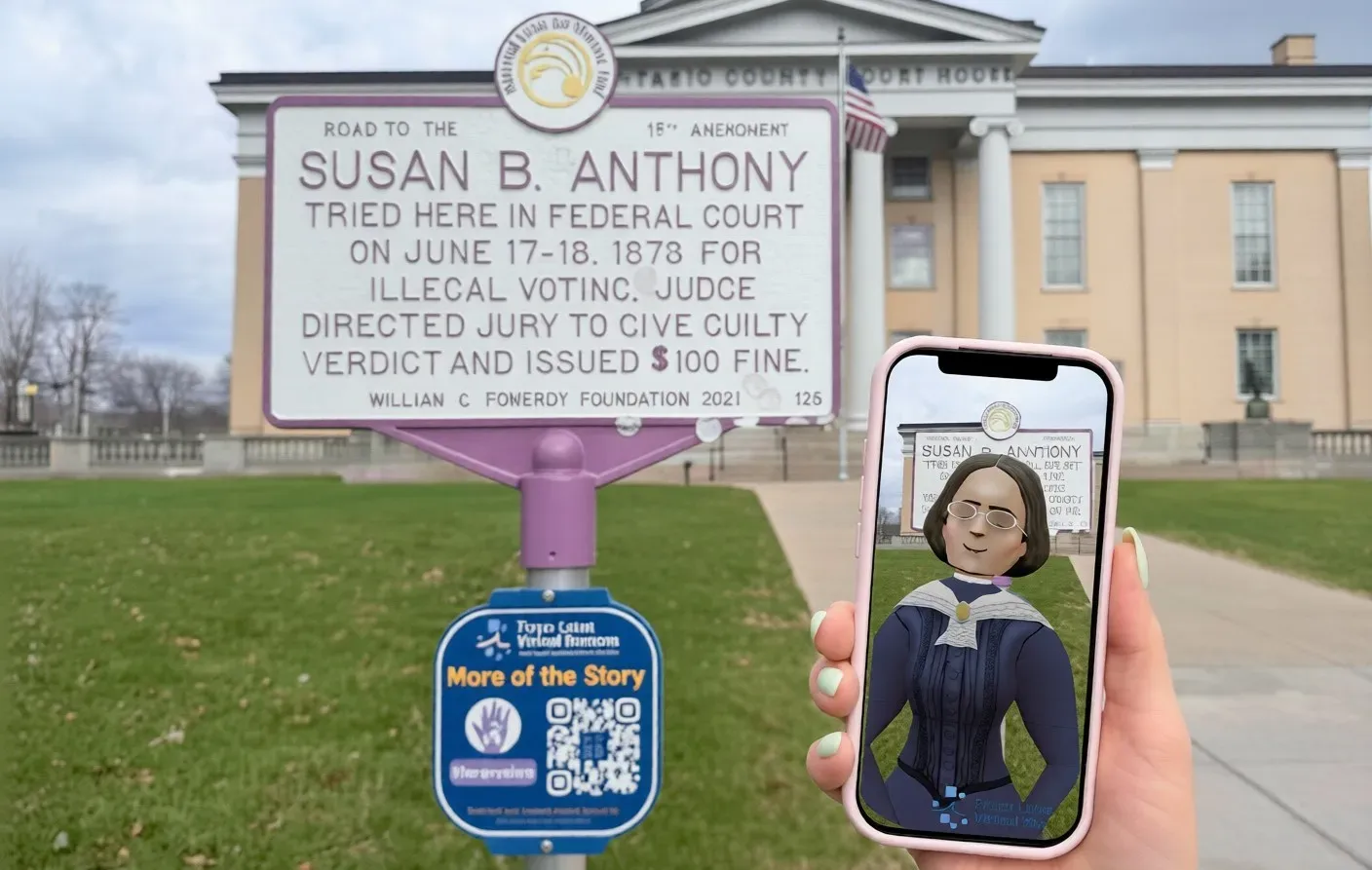
In Ontario County, New York, history is everywhere.
It lives along Main Streets and lakefronts, in public squares and schoolhouses, at museums and historic homes, and beside the roads that connect more than 20 municipalities across the county.
The stories are just as varied as the landscape. They include trailblazers and changemakers, agriculture and industry, transportation and education, Indigenous history and the fight for civil rights. Nationally recognized figures like Susan B. Anthony and Frederick Douglass are connected to the region, but so are countless local people, places, and events whose stories may be less familiar—even to the people who live nearby.
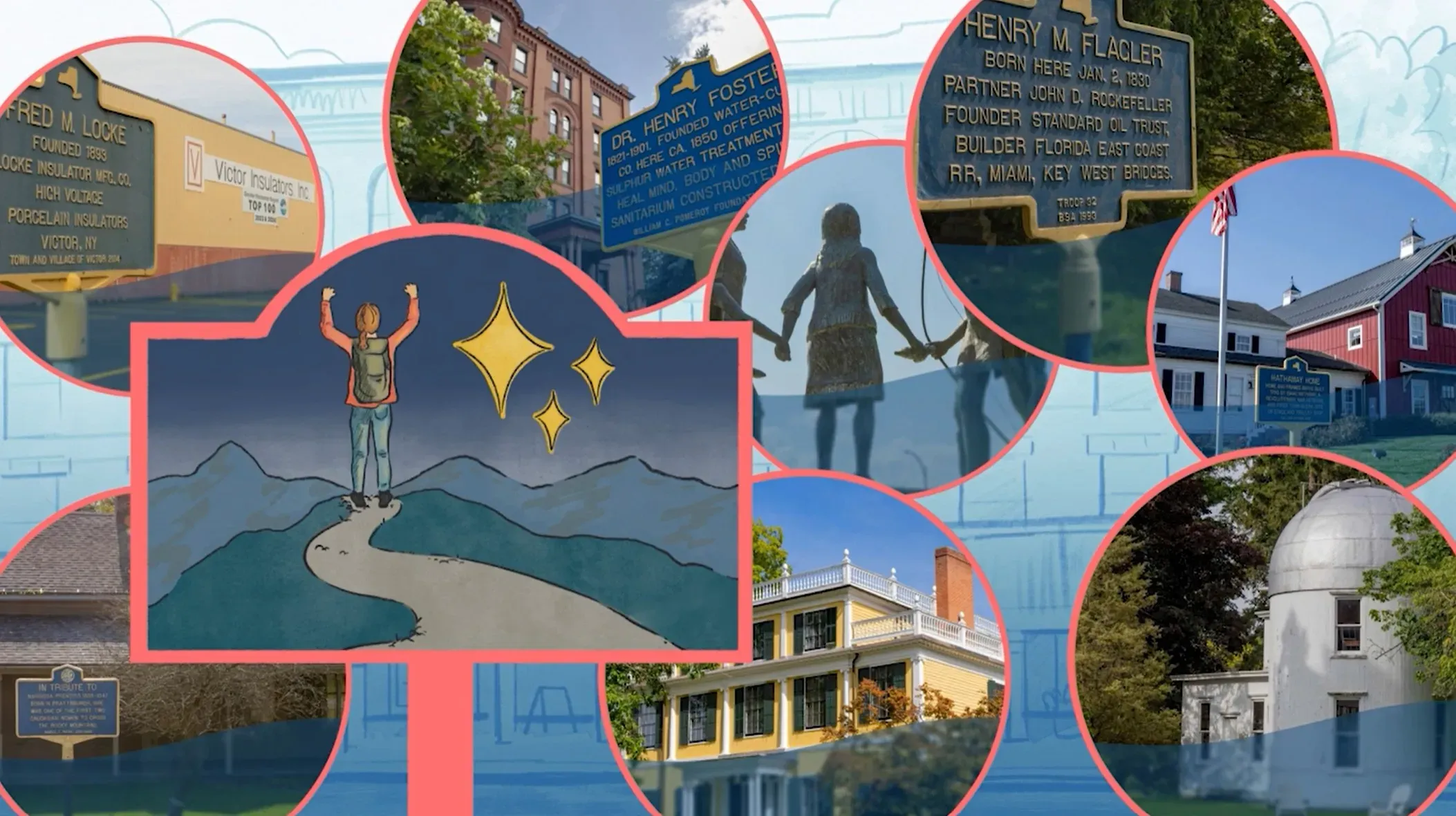
Hundreds of historic markers help preserve that history across Ontario County.
But Visit Finger Lakes saw an opportunity to help people discover what lies beyond the words on the signs.
What if visitors and residents could scan a QR code, hear the voices and stories connected to a location, experience history through augmented reality, unlock digital badges, follow themed trails, and discover connections between places they may have passed countless times before?
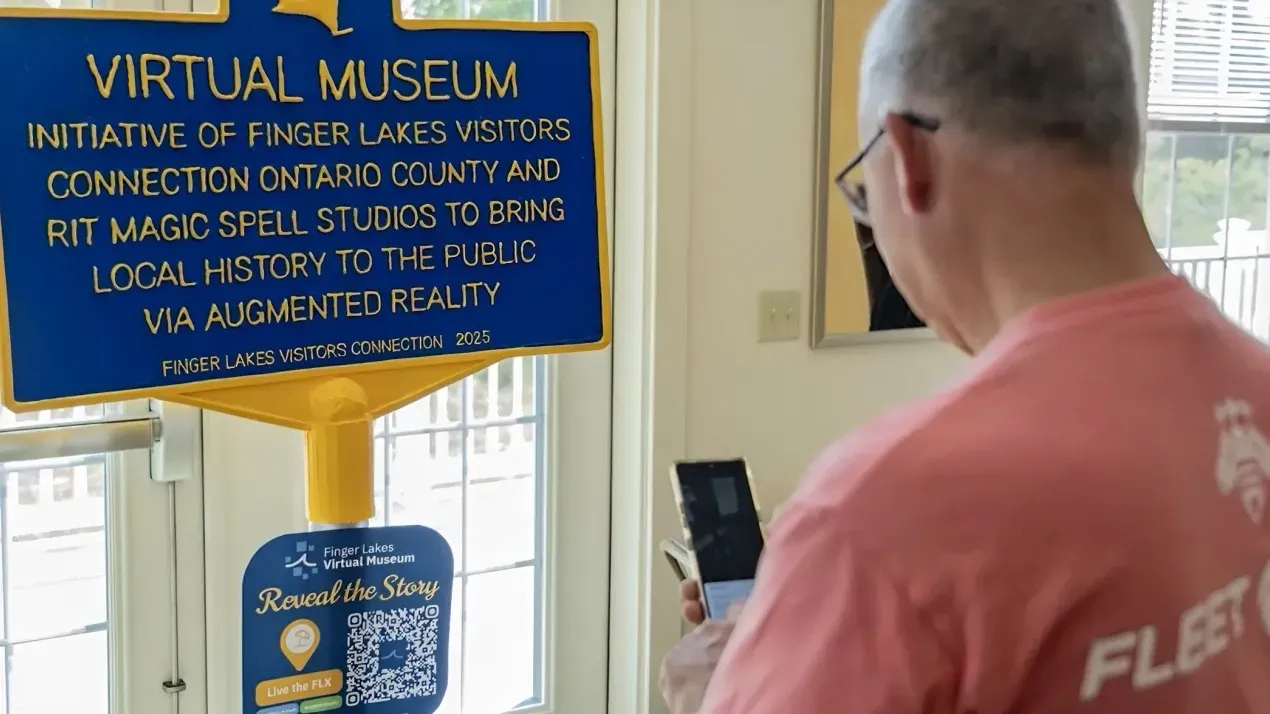
That idea became the Finger Lakes Virtual Museum, a “museum without walls” that transforms historic sites across Ontario County into interactive experiences.
Jessica VanDeMar, Partnership Marketing Specialist at Visit Finger Lakes, said the idea began under former CEO Valerie Knoblauch. The team had been documenting historic markers across the region and thinking about how to tell the deeper stories behind them.
“As a team, we had been driving around seeing the historic markers throughout the region,” Jessica said. “We were trying to think about what we could do with those to tell more of the story.”
Around that time, Valerie visited an attraction where guests could scan images on the ground to trigger augmented reality experiences. It sparked an idea: what if Visit Finger Lakes could do something similar with its historic markers?
The concept grew from there. What began as a database of signs became a vision for an interactive virtual museum that could bring the people, places, and stories of Ontario County to life.
Finding the Story Beyond the Sign
For destinations and DMOs considering a digital experience, the Finger Lakes Virtual Museum offers a key insight: start with what you want people to discover.
The technology made the experience possible. The stories gave it purpose.
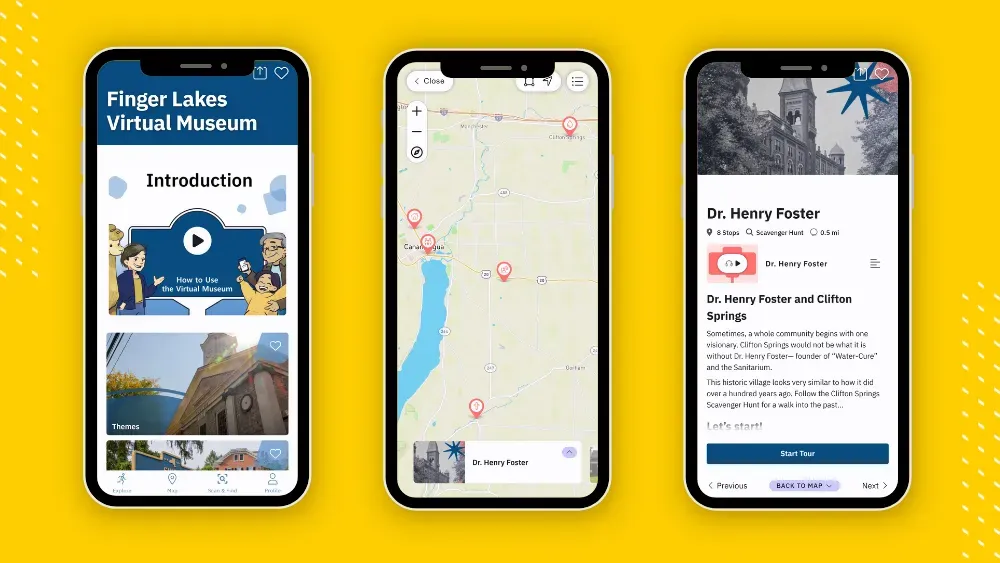
A Countywide Museum Without Walls
The Finger Lakes Virtual Museum turns Ontario County itself into the museum.
Instead of asking visitors to start in one building, the experience invites them to explore history where it happened. A person can scan a QR code at a marker, open the experience on a mobile device, and access audio, images, augmented reality, and additional context connected to that location.
The project includes a wide range of historic sites and topics, from Susan B. Anthony and the Treaty of Canandaigua to local schools, lakefronts, public squares, agricultural history, community landmarks, museums, and stories connected to people like Frederick Douglass, Elizabeth Blackwell, Henry M. Flagler, and Dr. Henry Foster.
The experience is organized into themes such as:
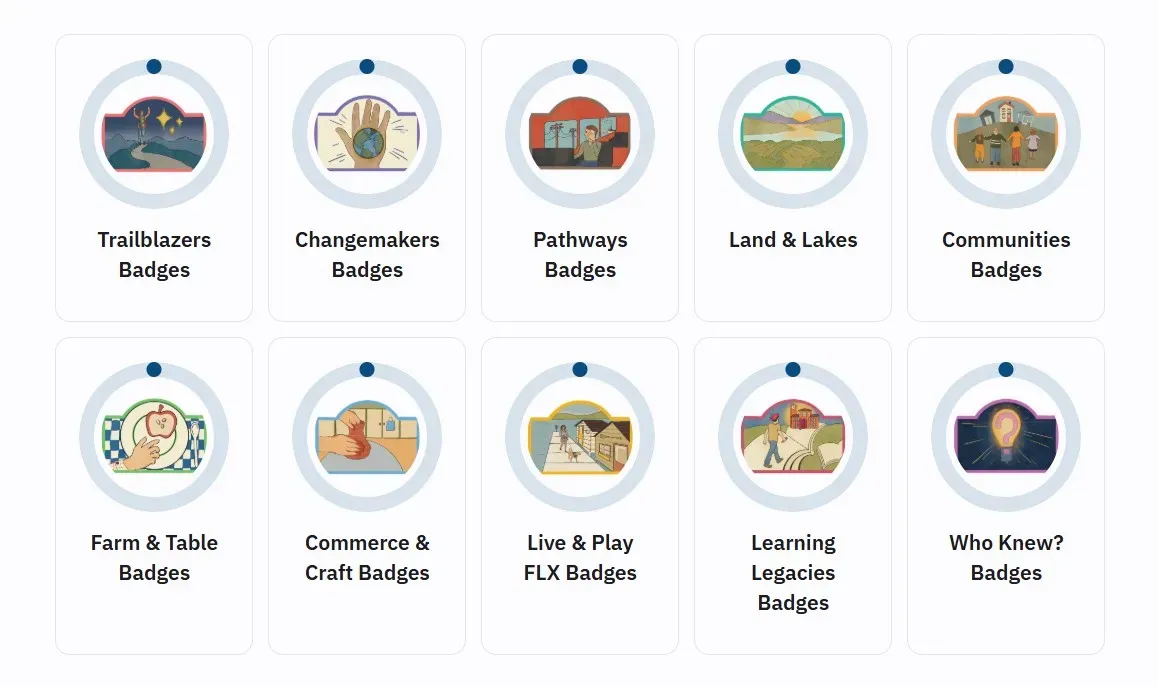
- Changemakers
- Land & Lakes
- Farm & Table
- Commerce & Craft
- Live & Play FLX
Those themes help visitors understand the region through connected storylines.
The result is a flexible experience that can serve many different audiences. A family can explore a few stops during a weekend visit. A local resident can follow a theme over time. A teacher can use the experience to connect students with nearby history. A heritage traveler can use the virtual museum to discover museums, public sites, and local resources across the county.
Rather than a replacement for physical places, it is a new layer that helps people see those places differently.
Building a Community Project Takes a Community
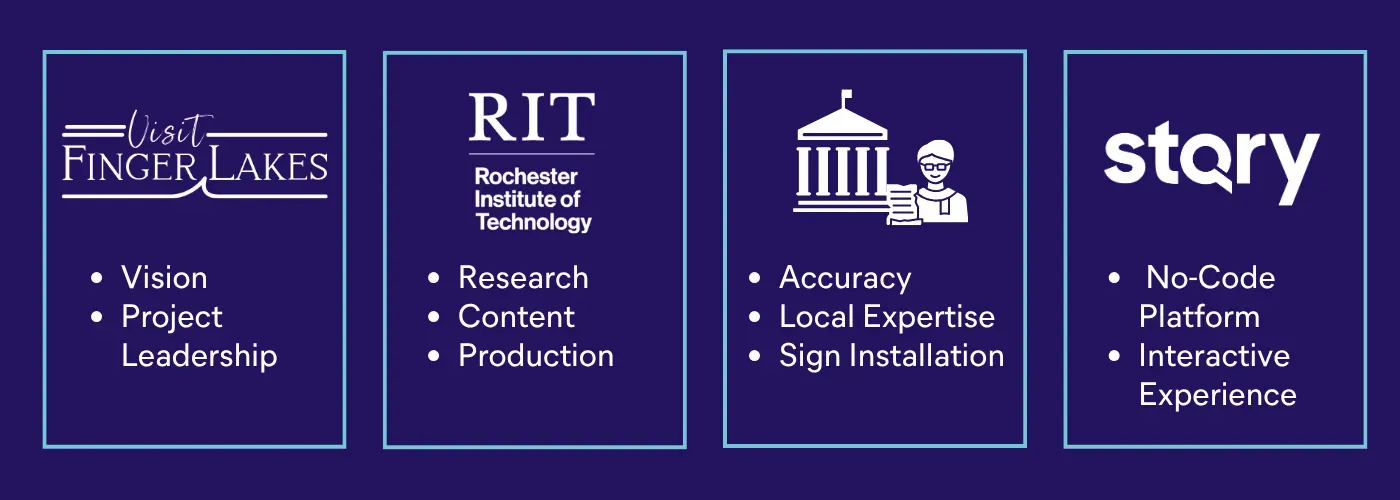
Visit Finger Lakes had the vision for the Virtual Museum, but bringing an experience of this scale to life required expertise and participation from across the community.
Students and professionals at Rochester Institute of Technology (RIT), including its MAGIC Center, supported research, content development, audio production, and building the experience within STQRY.
Local historians and historical societies helped ensure the stories being shared were accurate and authentic. With more than 20 municipalities across Ontario County, that local expertise was essential to representing the people, places, and history of communities throughout the region.
Municipalities also played an important role in bringing the digital and physical pieces together, including coordinating the installation of approximately 30 new historic signs.
Powering it all was STQRY, the no-code builder used to create and manage the Virtual Museum experience. With so many contributors and moving pieces, the platform gave the project a central place to bring together content, audio, augmented reality, maps, gamification, and other interactive elements.
“In general, all of the technology was pretty new to us,” Jessica said.
That may be one of the most valuable lessons for other destinations considering a similar project. Visit Finger Lakes did not need to begin with every technical detail figured out. They started with a strong idea, brought together partners with the right expertise, and used STQRY to turn those contributions into one connected visitor experience.
“A lot of it is figuring out how to work together when you have so many moving pieces,” Jessica said.
For other DMOs, cities, and communities, the Finger Lakes Virtual Museum offers a replicable model: bring together the people who know the stories, the partners who can help create the content, and a flexible platform that can bring it all to life.
Organizing Hundreds of Stories
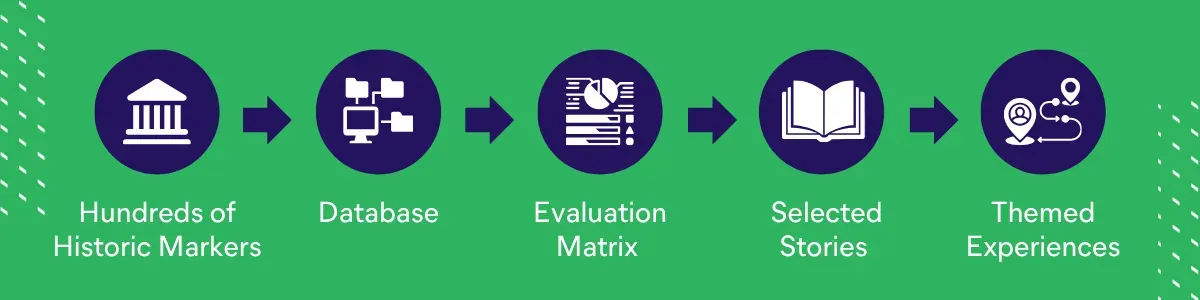
There were hundreds of signs across the county. Visit Finger Lakes had to organize the raw material.
The team needed to finalize a database, decide which locations should be included in the project, and determine how those locations would be categorized.
Jessica said the team used a matrix to help evaluate which signs would become part of the experience.
That step was essential. With a project of this scale, not every marker could be treated the same way. The team needed a process to narrow the list, identify priorities, and create a structure that would make sense to visitors.
For other communities, this may be the most actionable part of the Finger Lakes example. Many places already have historic markers, archives, walking tour content, plaques, brochures, or local history resources. The opportunity is to organize those assets into an experience that feels connected, engaging, and easy to explore.
Designing an Experience People Wanted to Complete
The Finger Lakes Virtual Museum is not only educational. It is interactive.
Visitors can scan signs, explore themed content, and earn badges as they move through the experience.
Jessica said the team spent time thinking through how the badge experience should work.
They ultimately landed on a progress bar that appears around the outside of a circle for each theme. Once someone visits all the locations within a theme, the badge is complete.
That gamified structure gives people a reason to keep going. It creates a sense of progress and accomplishment while still keeping the focus on history and place.
Visit Finger Lakes also explored how the digital experience could connect back to the physical world. The team brainstormed ideas for physical badges and created promotional trading cards for the kickoff. Those cards are being used as part of a scavenger hunt designed to encourage people to visit sign locations, share their journey, and enter to win local prizes.
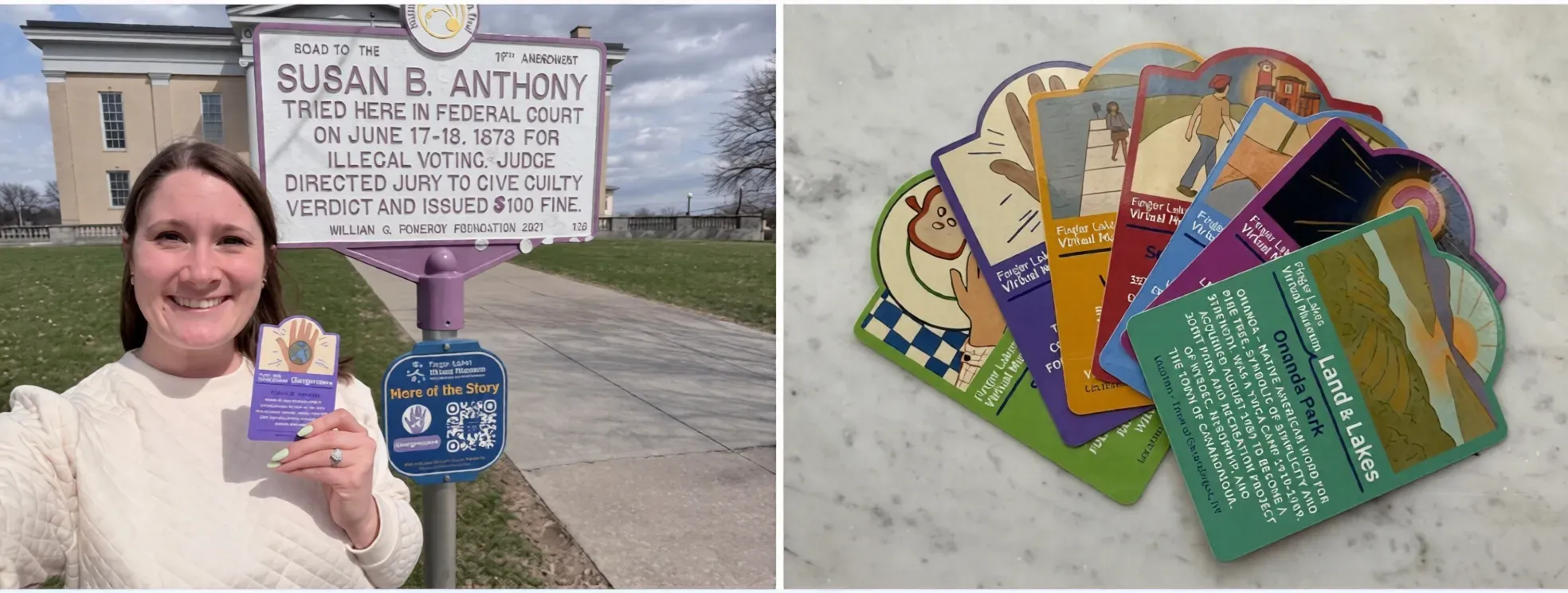
The scavenger hunt invites participants to visit historic sign locations, take photos, post them on social media, and use the campaign hashtag. Visitors can earn entries for each sign they visit and additional entries when they visit the location that matches their trading card.
The result is an experience that supports both visitor engagement and destination marketing goals. The experience encourages people to explore more places, engage with local history, share their participation online, and connect with local businesses through prize partnerships.
For other DMOs, towns, and cities, this is where the Finger Lakes Virtual Museum becomes especially inspiring. The project shows how digital storytelling, gamification, QR codes, AR, badges, trading cards, social sharing, and local prizes can work together to create a visitor experience that is both educational and participatory.
Taking the Time to Do It Right
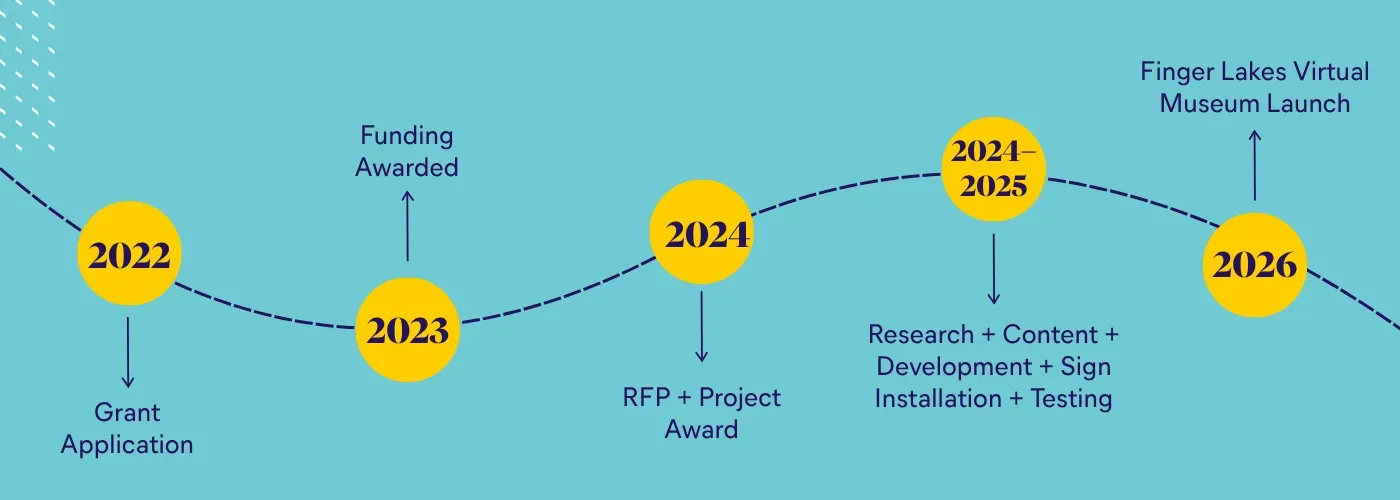
The grant process began in 2022. Funding was awarded in 2023. The RFP process and project award followed in 2024. Content creation, digital development, physical signage, testing, and launch preparation continued through 2024 and 2025.
Jessica said content creation and digital production took about a year, with additional work needed for the physical components of the project.
Some of the longest timelines were connected to the signs themselves. Physical sign production and installation had to happen alongside the digital experience.
Visit Finger Lakes also tested the experience with the community before launch. The team held a user experience demo to collect feedback from local participants.
The feedback helped Visit Finger Lakes make practical decisions about the experience, from placing QR codes on the sides of signs to evaluating early audio recordings and whether visitors preferred male voices, female voices, or a mix.
For Jessica, one of the biggest lessons is that projects like this need time.
“Recognize that it’s a lot of moving parts that will take time to do it well and do it right,” she said.
Accuracy remained a top priority. Visit Finger Lakes spent time with local historical societies and historians to ensure the stories were being told correctly.
Jessica said that even after launch planning, the team was still meeting with historians.
That care matters. Heritage storytelling is not simply content production. It is stewardship.
For destinations considering a similar project, the Finger Lakes example proves the importance of moving thoughtfully, staying organized, involving the right people, and giving the project enough time to become something the community can be proud of.
Bringing Local History to Life
One of Jessica’s favorite examples from the Finger Lakes Virtual Museum is the Dr. Henry Foster story in Clifton Springs.
Dr. Foster has a historic marker, and that QR code serves as the starting point for a Clifton Springs scavenger hunt. Throughout the experience, visitors learn more about the community and the history connected to the Clifton Springs Sanitarium.
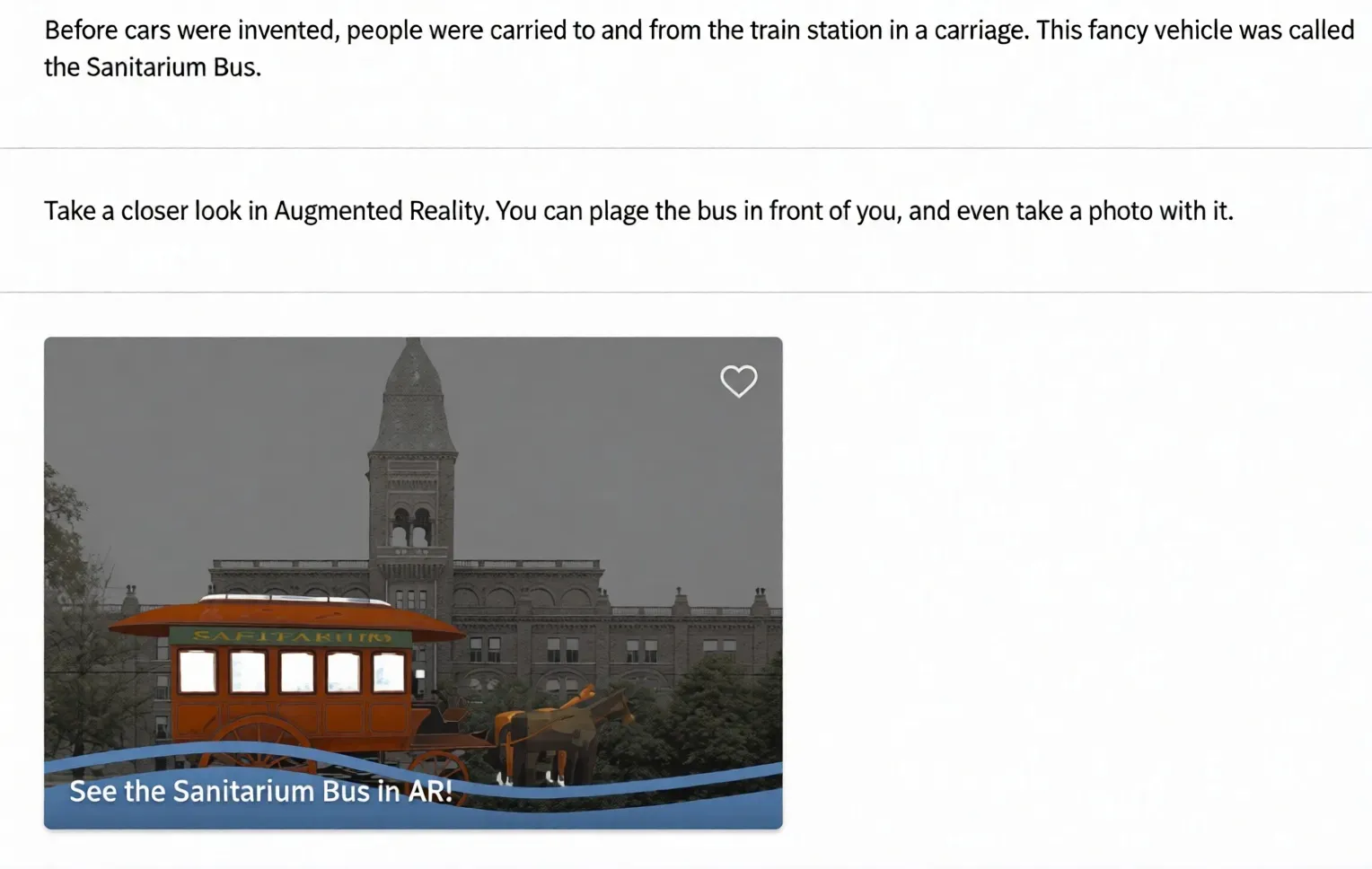
At one stop, visitors discover how patients and guests once traveled between the train station and the Sanitarium. Before automobiles, they were transported by carriage in an ornate vehicle known as the Sanitarium Bus.
Rather than simply describing the bus, the Virtual Museum allows visitors to see it for themselves.
Using augmented reality, visitors can place a digital recreation of the Sanitarium Bus in the physical space in front of them, examine it more closely, and even take a photo with it.
For Jessica, experiences like this demonstrate the opportunity to make history feel more tangible.
A visitor standing in present-day Clifton Springs may have no way of knowing what transportation to the Sanitarium once looked like. The AR experience adds that missing layer, allowing people to see something from the past within the place where its story happened.
The Historic Canandaigua Public Square offers another example. Instead of focusing on a single person or object, the experience helps visitors understand an entire area by sharing what its buildings are today, what they once were, and how Main Street has changed over time.
These experiences help visitors make connections between the history they may already know and the places directly in front of them.
People may remember learning about figures like Frederick Douglass or Susan B. Anthony in school. But the Virtual Museum gives them an opportunity to discover how those larger stories connect to specific people, places, and events in Ontario County.
Jessica described the kind of discovery the experience can create: “Oh, I’ve never heard this story is related to this story.”
That is where the Virtual Museum helps visitors see the relationships between people, places, and events—and understand how the streets, buildings, and communities around them fit into a much larger story.
The technology does not replace the historic site. It gives visitors new ways to see, understand, and engage with what was already there.
More Than a Visitor Experience
The Finger Lakes Virtual Museum also gives residents new ways to explore the history in their own backyard while connecting them with local museums, historic sites, and community organizations.
By encouraging people to visit markers, clean signs during National Historic Marker Weekend, participate in scavenger hunts, and share local stories, Visit Finger Lakes is turning passive awareness into active participation.
It is a digital project with a physical community presence.
And that is part of what makes it work.
Three Lessons – What Other Destinations Can Learn From Visit Finger Lakes
The Finger Lakes Virtual Museum offers a practical blueprint for DMOs, towns, cities, counties, and cultural organizations that want to create more engaging heritage experiences.
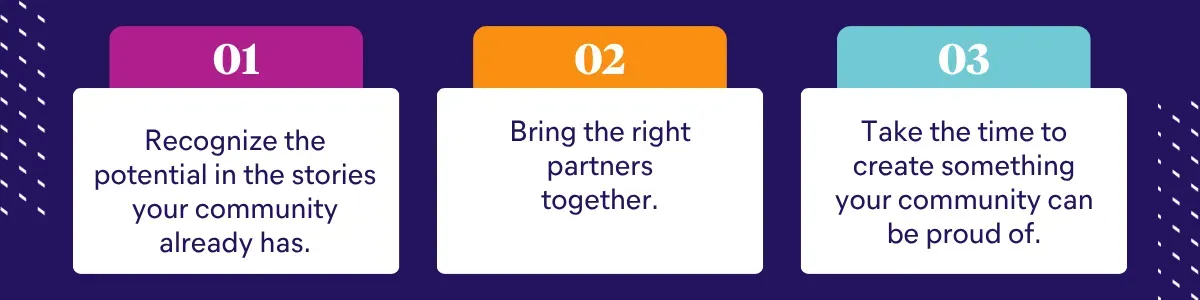
1. Recognize the potential in the stories your community already has. Visit Finger Lakes began with the history already present across Ontario County and found new ways to connect and share it.
2. Bring the right partners together. RIT’s MAGIC Center brought creative and production expertise, local historians helped ensure accuracy, municipalities helped bring the physical elements to life, and STQRY provided the no-code platform that brought it all together.
3. Take the time to create something your community can be proud of. From research and sign installation to user testing and historian review, Visit Finger Lakes gave the project the time and care needed to do it well.
For any destination wondering where to begin, the Finger Lakes Virtual Museum shows that the starting point may already be there: in the signs, stories, landmarks, archives, and local knowledge your community has been carrying all along.
With the right structure, partners, and platform, those stories can become an experience people want to explore, share, and return to.
Explore the Finger Lakes Virtual Museum
See for yourself how Visit Finger Lakes turned local history into an interactive, countywide experience. Explore the Finger Lakes Virtual Museum and discover the stories, augmented reality, themed trails, and gamification that bring Ontario County’s history to life.
Have an idea for a virtual museum, heritage trail, historic marker project, or interactive destination experience of your own? Connect with the STQRY team to start exploring what’s possible.