

Picture a tourist stopping in front of a centuries-old building. There is no sign, no guide, and no context. Just an old wall on a quiet street. They take a quick photo and move on. The history behind that wall is lost.
Now picture the same tourist holding their phone and pointing it at that building. The structure appears in its original form. A narrated story begins. A map shows where to go next. They spend 30 minutes exploring something they almost ignored.
That is the power of a heritage walk app. It shows the difference between a missed moment and a meaningful experience.
What Is a Heritage Walk App?
A heritage walk app is a mobile guide that helps visitors explore historic or cultural routes using maps, stories, and interactive features. It works like a personal guide on your phone that you can use anytime.
Unlike generic travel apps, heritage walk apps go deeper. They focus on specific places, specific stories, and specific communities.
Whether it's a colonial-era district, an indigenous cultural trail, or a centuries-old market town, these apps turn ordinary walks into memorable journeys.
They come in several formats:
- Self-guided audio tours that narrate each stop as you arrive
- Augmented reality (AR) overlays that bring historical scenes to life through your phone's camera
- Themed routes built around architecture, food heritage, folklore, or religious history
And demand for all of it is growing fast. Research shows that the global heritage tourism market was valued at USD 624.55 billion in 2025 and is projected to reach USD 936.97 billion by 2033.
Mobile is leading that growth and the destinations that build smart digital tools now will be the ones visitors choose tomorrow.
Why Visitor Experience Is Important
Here's the uncomfortable truth: most heritage sites aren't delivering the experience visitors actually want.
Faded signs are easy to ignore. Guided tours follow fixed schedules and make people wait. Printed brochures often get thrown away. These tools were built for a different kind of visitor.
Today's visitors, especially millennials and Gen Z, travel differently. According to data cited by Bloomberg, 86% of millennials travel for experience and culture.
Moreover, millennial travel statistics show 60% rank authentic cultural experience as the most essential part of their trip. They're not looking for passive sightseeing. They want to feel connected to the places they visit.
For heritage sites, this means visitors arrive with high expectations but leave disappointed when the experience falls short. That disappointment shows in reviews, shorter visits, and less spending at nearby businesses.
On the flip side, the return on a great digital experience is measurable. Visitors who feel engaged stay longer. They spend more. They leave better reviews and recommend the destination to others. They come back.
And for organizations applying for heritage grants or government funding, strong visitor data tells a compelling story.
A well-designed heritage walk app doesn't just improve the visitor experience. It also improves the business case for everything you do.
Core Features of a Successful Heritage Walk App
So what makes a heritage walk app actually work? Here's a breakdown of the features that matter most.
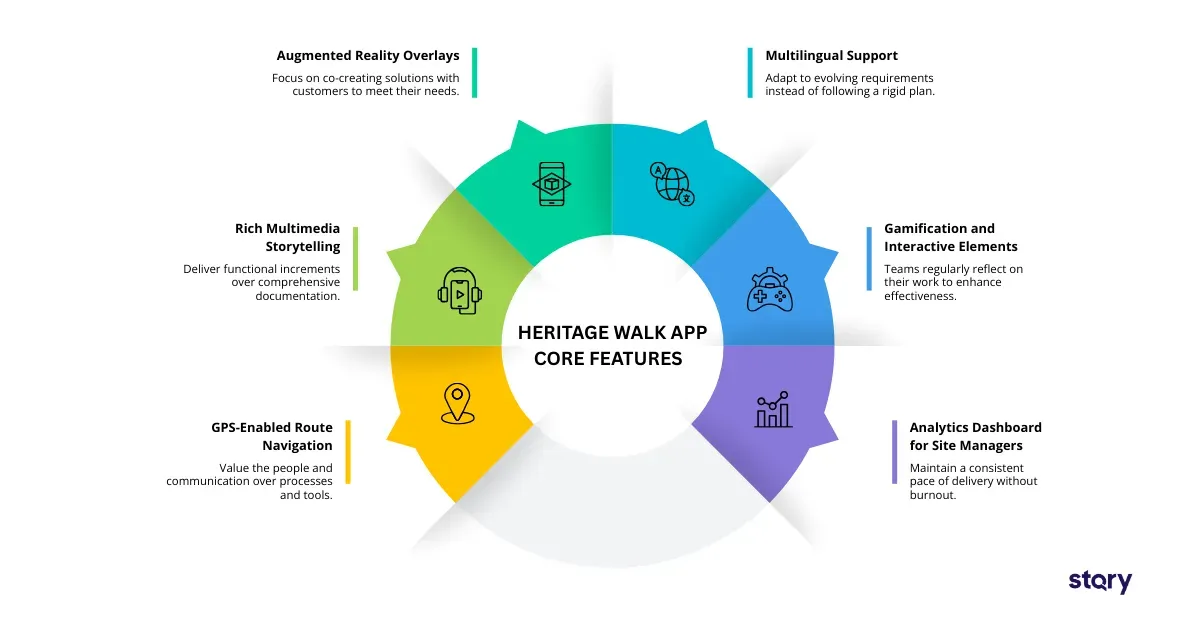
1. GPS-Enabled Route Navigation
Navigation is key for any walking tour app. Visitors need clear directions, especially in narrow or confusing streets.
The best apps offer turn-by-turn guidance, offline maps, customizable routes, and accessible paths.
Two technologies make this smarter. Geofencing sets invisible boundaries that trigger audio or media when visitors arrive. Bluetooth beacons do the same indoors, detecting visitors within a few meters.
Together, they create an experience that responds automatically to a visitor’s exact location.
2. Rich Multimedia Storytelling
Once visitors arrive at a stop, what they hear and see determines whether they remember it. Here are the content formats that consistently deliver the strongest visitor engagement:
- Audio narration in a story-driven, conversational style makes history feel personal.
- Then-and-now photo galleries show what a place looked like in the past compared with today.
- Short videos, expert interviews, and archival footage add extra depth for visitors who want to explore further.
3. Augmented Reality Overlays
If there's one feature that separates a good heritage app from a great one, it's AR.
Research published in Tourism Management found that AR technology in heritage museums fostered visitors' sense of connection across time and directly elevated their satisfaction.
Another study published in npj Heritage Science found that novelty, trust, and perceived authenticity all drove visitors' intention to use AR again and recommend the destination.
In practice, AR allows visitors to point their phone at a heritage building and watch it reconstruct in its original state. No other tool creates that kind of "wow" moment as consistently.
SA National Parks Tours app is a great example of this. Visitors to Glenthorne in South Australia can point their phone at an empty landscape and see a historic house reappear.
The building burned down in 1932, but AR brings it back with the stories of the events and gatherings that once took place.
4. Multilingual Support
For destinations with international visitors, multilingual content is essential. Visitors who cannot understand the content will disengage, no matter how rich the experience.
Language barriers often cause tourists to leave early. When they miss the story behind a place, sites lose valuable opportunities for loyalty, word-of-mouth, and return visits.
5. Gamification and Interactive Elements
Gamification sounds like a gimmick. In practice, it's one of the most effective tools for increasing engagement and dwell time.
Checkpoint quizzes, trivia at each stop, and digital badges earned by completing the full route add a layer of fun that keeps visitors moving.
For school groups and families, a scavenger hunt mode turns the walk into a team activity. For solo explorers, a leaderboard and achievement system creates a reason to come back for the next themed route.
6. Analytics Dashboard for Site Managers
The data from a heritage walk app is as valuable as the experience itself.
A dashboard tracks key performance metrics like which stops visitors enjoy most, how long they spend on each route, and which languages they use. This data helps improve content, support grant applications, and justify ongoing investment.
How to Make Your Heritage Walk App Pay for Itself
A heritage walk app is more than a visitor tool. It can also generate revenue. The right model can cover running costs, fund content updates, and create extra funds for future development. Here are six models to consider:
| Model | Description | Best For |
|---|---|---|
| Freemium | Free basic route; premium content unlocked via in-app purchase | General public apps |
| Subscription | Annual pass for all city heritage walks | Local and repeat visitors |
| Institutional licensing | Schools and tour operators pay for group access | B2B revenue |
| Sponsored stops | Local businesses sponsor named stops in the app | Community partnerships |
| Grant funding | Heritage, arts, and digital innovation grants | Non-profits and public bodies |
Why STQRY Is the Best Platform for Your Heritage Walk App
STQRY is the leading no-code app builder built specifically for cultural and heritage organizations. No developers needed. Just an intuitive drag-and-drop builder that lets your team create, publish, and update rich guided experiences on your own.
With STQRY Apps, you can turn your heritage walks and audio guides into a custom mobile and web app. Visitors can use it on their own device without downloading anything.
Organizations with existing PDF-based heritage walk guides can also easily convert that content into a fully interactive digital tour. No starting from scratch required.
STQRY supports everything covered in this guide, including:
- GPS navigation
- Offline maps
- Audio and video conten
- AR
- Geofencing
- Bluetooth beacons
- Multilingual support
- Gamification
- Accessibility features
And if you ever get stuck, our customer success team is known for hands-on, responsive customer support that walks you through every step of the build process.
Case Study: African American Heritage Preservation Foundation
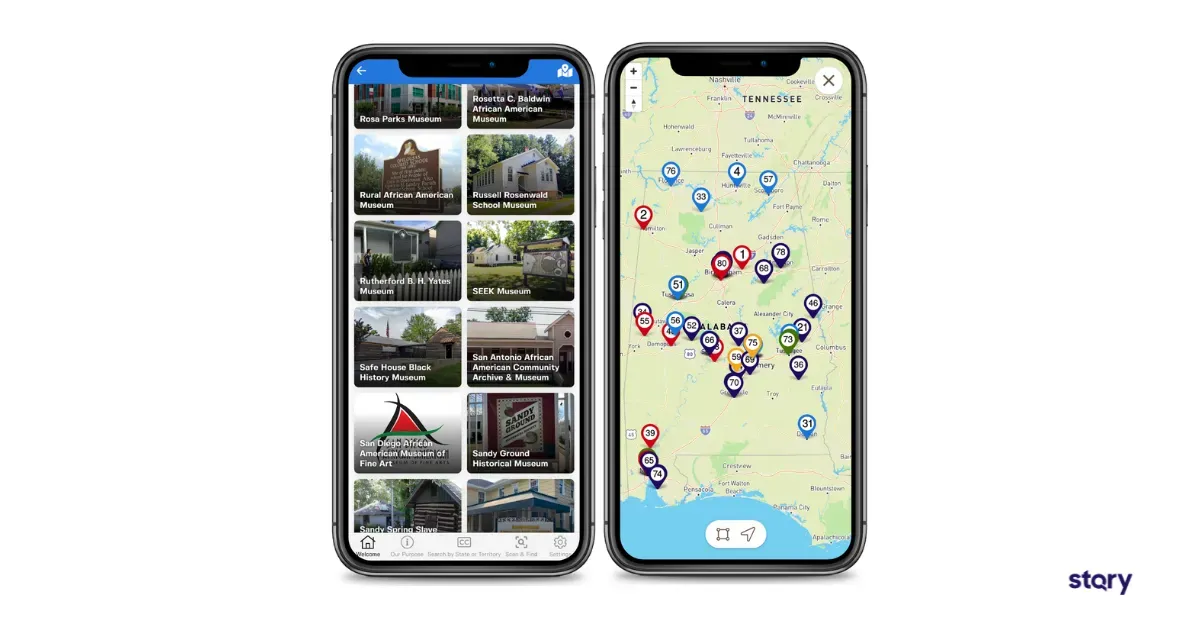
The African American Heritage Preservation Foundation (AAHPF) had a problem familiar to many heritage organizations. Thousands of important African American sites across the U.S. were at risk, not just from demolition or neglect, but because their stories were not being told.
With STQRY Apps, the Foundation built African American Sites, a mobile app featuring over 1,700 heritage locations across the US and its territories.
Before the app existed, finding information about these sites meant navigating multiple disconnected websites. Now, everything lives in one place.
Each listing has a summary of the site's history, links to documents, virtual tours, and lesson plans when available. Users can explore heritage trails, military sites, landmarks, and museums all in one app.
The app's popularity led to a second, enhanced version with geofencing built in. Visitors receive automatic notifications when they are physically near a listed site. This created a direct connection between the digital content and the real-world location.
"The STQRY platform has been very easy to use as an administrator for updating and adding sites to the app," - AAHPF founder E. Renée Ingram
This case study shows that a heritage walk app doesn’t need a big budget or a development team.
With the right platform, even a small organization can reach hundreds of thousands of people and preserve history that might otherwise be lost.
Start Building Your Heritage Walk App with STQRY
Your heritage site has stories worth telling. STQRY gives you everything you need to tell them well. From GPS-guided routes and AR overlays to multilingual audio tours and gamification, the platform is built for exactly this kind of work.
STQRY offers two products for heritage walks. STQRY Apps lets visitors access tours on their own device through a custom mobile or web app.
On the other hand, STQRY Fleet uses on-site devices that you manage, which works well for visitors without phones or reliable internet.
Ready to get started?