
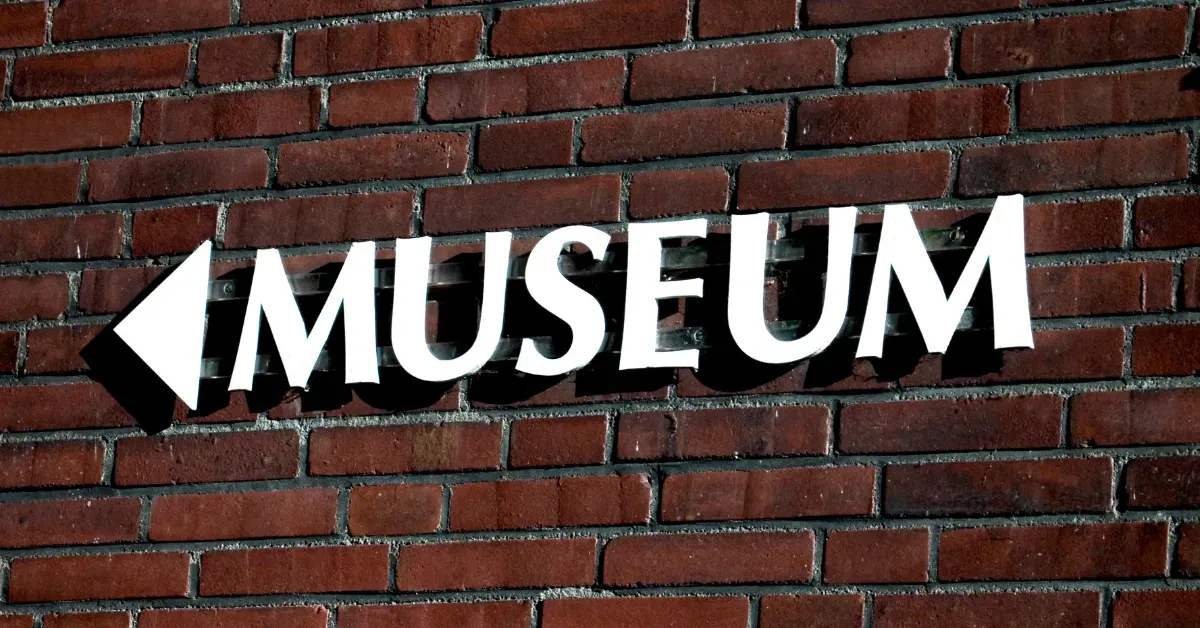
We interact with wayfinding signage every day, often without noticing it. It guides us through places like shopping malls, museum galleries, nature trails, and airports. In unfamiliar spaces, it points us to the right exhibit, exit, or entrance.
But what exactly is wayfinding signage, and why does it matter so much?
What is Wayfinding Signage?
Wayfinding signage is a system of signs designed to help people navigate through a space. It includes directional signs, maps, labels, and information that guide people to their destination and help them understand where they are.
It is used in places like museums, airports, hospitals, parks, and campuses to make movement easier, reduce confusion, and improve the overall visitor experience.
A Brief History of Wayfinding
Wayfinding is not a modern invention. Humans have been solving navigation challenges for thousands of years.
Early travelers used simple signs to find their way. Ancient cave painters marked paths and territories with symbols. Roman road builders placed milestones along roads to show distances. In medieval times, pilgrims followed painted crosses and stacked stones to reach sacred places.
The concept became formalized in 1960, when urban planner Kevin Lynch published The Image of the City.
Lynch introduced five key elements people use to understand and navigate spaces: paths, nodes, edges, districts, and landmarks. His research showed that wayfinding is not just a mental process. It is closely tied to how spaces are designed and experienced.
His framework remains widely used in architecture, urban design, and environmental psychology.
From there, wayfinding evolved steadily. The late 20th century brought environmental graphic design as a recognized profession, along with formal accessibility legislation.
The Americans with Disabilities Act (ADA) of 1990 introduced standardized requirements for signage, including braille, tactile characters, and mounting heights. This made wayfinding not just a design consideration but a legal one.
Today, wayfinding has entered the digital age. Static signs are now complemented by interactive kiosks, mobile app handoffs, and real-time digital directories.
The core goal, however, has not changed. It is to help people find their way confidently and without stress.
What are the 4 types of wayfinding signage?
A well-designed wayfinding system is made up of four distinct sign types, each with a specific role. Together, they form a complete navigation experience.
1. Directional Signage
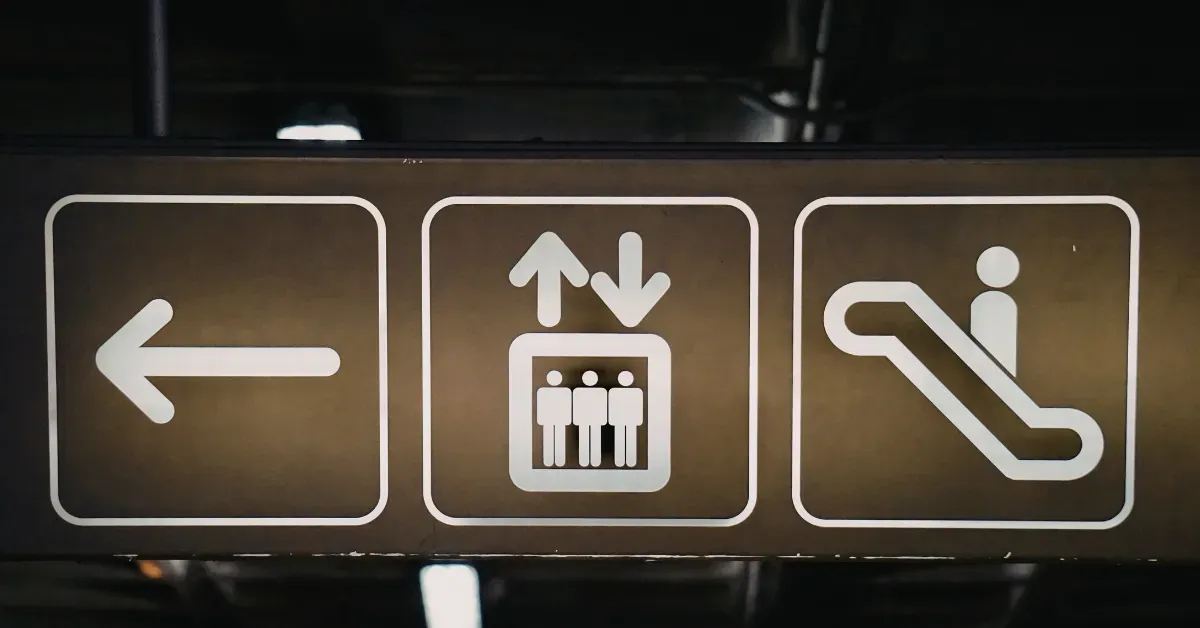
Directional signage helps people go the right way. You usually see it at decision points, like trail intersections, entrances, stairways, or anywhere someone might stop and wonder where to go.
Common examples include arrows, hanging signs, trail markers, and park maps. In a park, signs showing directions to the visitor center, restrooms, picnic areas, or hiking trails guide people step by step.
Consistency matters. If a route changes terms halfway, like using “North Trail” on one sign and “Forest Path” on another for the same route, it quickly causes confusion.
2. Identification Signage
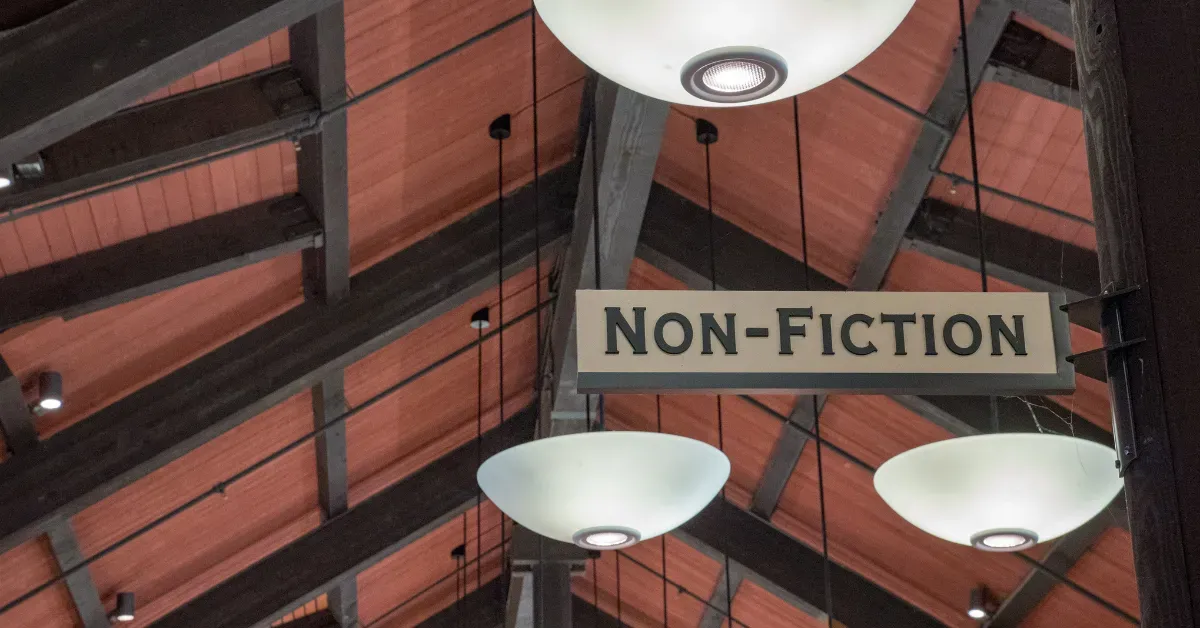
Identification signage tells people where they are. It labels spaces like rooms, sections, and facilities so visitors can confirm they’ve reached the right place.
In a library, signs on shelves like “Fiction,” “History,” or “Children’s Books” help visitors quickly understand which section they are in. Room labels and floor signs also confirm locations within the building.
The key principle is simplicity. An identification sign should be clear and easy to understand in just a few seconds.
3. Informational Signage
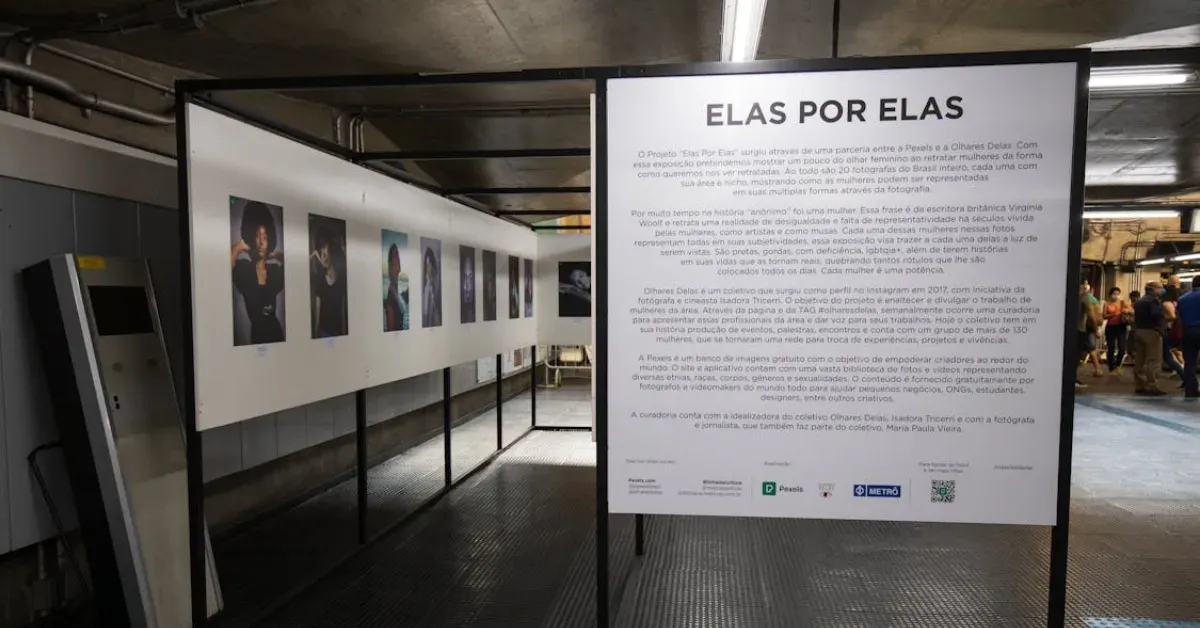
Informational signage gives visitors context. It doesn’t guide movement but helps people understand what they are seeing and how to engage with the space.
In museums, this includes exhibit panels, object labels, floor maps, and gallery introductions. These signs explain artworks, artifacts, and themes so visitors can better understand the collections.
They are usually placed throughout galleries and at key points like entrances or central spaces, where visitors naturally pause and look for information.
4. Regulatory Signage

Regulatory signage is the most authoritative type. It communicates rules, safety requirements, and legal obligations. Common examples include exit signs, no-smoking notices, maximum occupancy limits, and restricted-access doors
This type of signage is directly tied to safety standards like the ADA compliance and legal liability.
A building without proper emergency exit signage is not just poorly designed. It becomes a safety hazard and a legal risk, especially in emergencies where clear direction can save lives.
Regulatory signs must be bold, clear, and impossible to miss. There is no room for subtlety when signage is responsible for protecting people and guiding safe behavior.
What are the benefits of wayfinding signage?
It is easy to think of wayfinding signage as a practical afterthought, something you add once a building is finished.
In reality, it is one of the most impactful investments an organization can make. Here is why.
Improve Visitor Experience and Reduce Stress
A lost visitor is a stressed visitor. That stress creates a negative impression of your facility before a single interaction has even taken place.
Good wayfinding removes that friction. When people can navigate confidently, they arrive calmer, more focused, and with a better overall impression of the space.
Enhance Safety and Emergency Preparedness
In an emergency, seconds matter. Clear wayfinding signage, including marked fire exits, fire extinguisher locations, and evacuation routes, can be the difference between a safe, orderly evacuation and a dangerous one.
This is not optional. It is a fundamental responsibility of any building operator, and in most jurisdictions, it is mandated by law.
Strengthen Brand Identity
Wayfinding is also a branding opportunity. IKEA is a masterclass in this. The store's distinctive color-coded paths and overhead arrows do not just guide shoppers. They also create a signature experience that is instantly recognizable.
Museums with clear wayfinding also see longer dwell times, as customers feel comfortable exploring rather than anxiously searching for exits.
Support Accessibility and Ensure ADA Compliance
Good wayfinding serves everyone, including visitors with low vision, hearing impairments, mobility challenges, or language barriers.
ADA-compliant signage standards include tactile elements, Grade 2 Braille, high-contrast color schemes, and pictograms that work across languages.
This ensures your space is welcoming to all. Accessibility is not just a legal requirement. It is good design.
Increase Operational Efficiency
Every time a staff member stops to give directions, that is time taken away from their actual job. In a busy park, exhibits, or corporate campus, this adds up quickly.
Effective wayfinding reduces the burden on staff and creates a more self-sufficient, fluid visitor experience.
Digital vs. Static Wayfinding Signage
Wayfinding technology has evolved rapidly, and most environments today need to think carefully about the balance between static and digital solutions.
Static Signage
Static signs are durable, low-maintenance, and consistent. Once installed correctly, they require minimal upkeep and deliver reliable navigation information around the clock.
They are ideal for permanent features like building names, floor numbers, room identifiers, and emergency exit routes.
In environments with stable layouts, static signage forms the backbone of any wayfinding system.
Hybrid Systems
Most large venues use both static and digital wayfinding.
The most effective approach places digital kiosks and interactive directories at key entry points and decision areas. Static signage then handles consistent navigation along corridors in between.
Digital Wayfinding
Digital wayfinding solutions like interactive kiosks, digital directories, and QR code handoffs to mobile devices offer flexibility that static signs cannot match. They can update in real time and adapt to different user needs.
Layouts change, departments move, and events come and go. Digital systems allow updates in real time, without replacing a single physical sign.
A 2025 study found that 87% of visitors reported a reduction in navigation time after a digital wayfinding tool was implemented, and 83% experienced reduced psychological stress.
Beyond navigation, digital systems also generate analytics. They show which destinations are searched most, where visitors spend the most time, and where confusion happens.
Wayfinding Signage in Museums, Parks & Destinations
Cultural environments present a unique set of wayfinding challenges. Unlike hospitals or corporate offices, museums, botanical gardens, and parks must balance clear navigation with visual sensitivity. The signage cannot overpower or detract from the experience itself.
In these spaces, wayfinding signage has to do more. Visitors are exploring rather than going somewhere specific, and they move in less predictable ways through spaces designed for discovery.
At the same time, they still need to find restrooms, exits, accessibility routes, and exhibit entrances without frustration.
Material selection becomes especially important outdoors. Signs must withstand weather, UV exposure, and physical wear while remaining legible.
Low-profile, environmentally sensitive designs help signage blend into natural surroundings without standing out or disrupting the view.
For large, complex spaces like multi-building museums or national parks, a layered approach is needed. This includes site maps at entrances and directional signs along paths. It also uses identification signs at destinations and informational panels at key points.
Together, they create a layered system that is both flexible and reliable.
FAQs
What is the difference between wayfinding and signage?
Signage refers to individual signs like door labels, arrows, or exit signs. Wayfinding is the full system that helps people navigate a space, including signage, maps, space design, and digital tools.
Not all signage is part of a planned wayfinding system, but all wayfinding systems use signage.
How much does wayfinding signage cost?
Costs vary based on size, materials, and complexity.
Simple signage for a small office can cost a few thousand dollars. Full systems for hospitals or airports can reach hundreds of thousands
Digital wayfinding tools often come with ongoing subscription or licensing fees. Investing in professional design early helps avoid costly changes later.
What are the five principles of wayfinding?
The five key principles of wayfinding in a navigation system are Journey, Legibility, Accessibility, Design, and Consistency.
Enable Smarter Wayfinding for Your Destination with STQRY
STQRY provides a flexible, purpose-built solution designed to improve navigation and enhance the overall experience.
STQRY Signage transforms how venues communicate with their visitors. Instead of static printed signs, STQRY Signage lets you display videos, images, and curated content across remote screens in real time.
It supports multiple languages and works across a wide range of devices, including Smart TVs, Windows PCs, BrightSign players, and web browsers. It also makes content management simple with reusable assets and easy-to-use controls.
For venues that want more than basic directions, STQRY Signage turns every screen into a space to inform, engage, and share their story.
STQRY Kiosk brings interactive wayfinding to physical touchpoints throughout a venue. Visitors can explore interactive maps, search for specific exhibits or facilities, and receive step-by-step guidance, all from an intuitive touchscreen interface.
For venues that receive large volumes of international visitors, multilingual support ensures that language is never a barrier to navigation.
Together, STQRY Signage and STQRY Kiosk create a connected wayfinding system. Instead of being purely functional, digital wayfinding becomes part of the visitor experience.
Ready to build a smarter wayfinding system?