
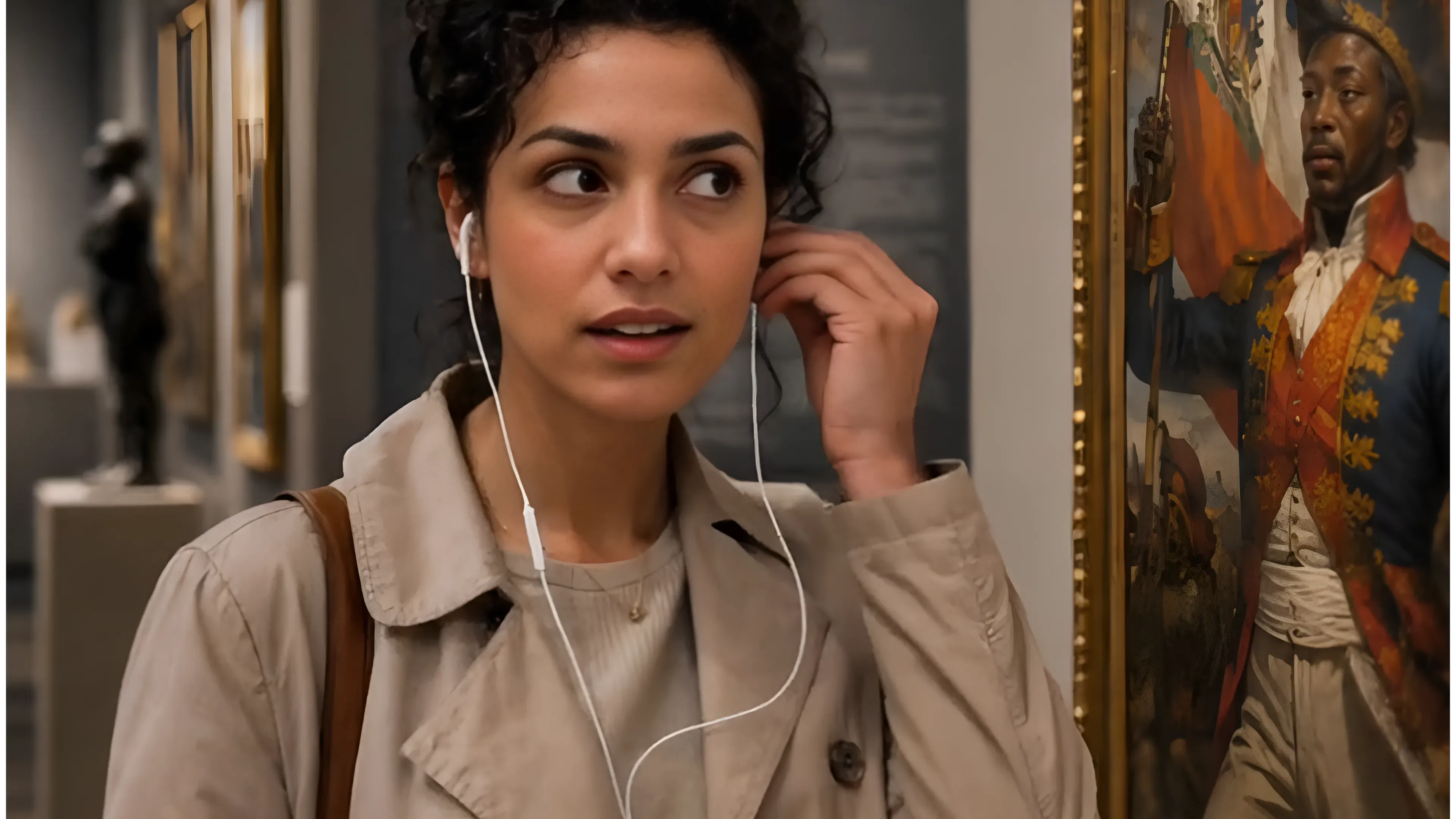
Historic sites, museums, memorials, and cultural spaces hold stories that deserve to be remembered.
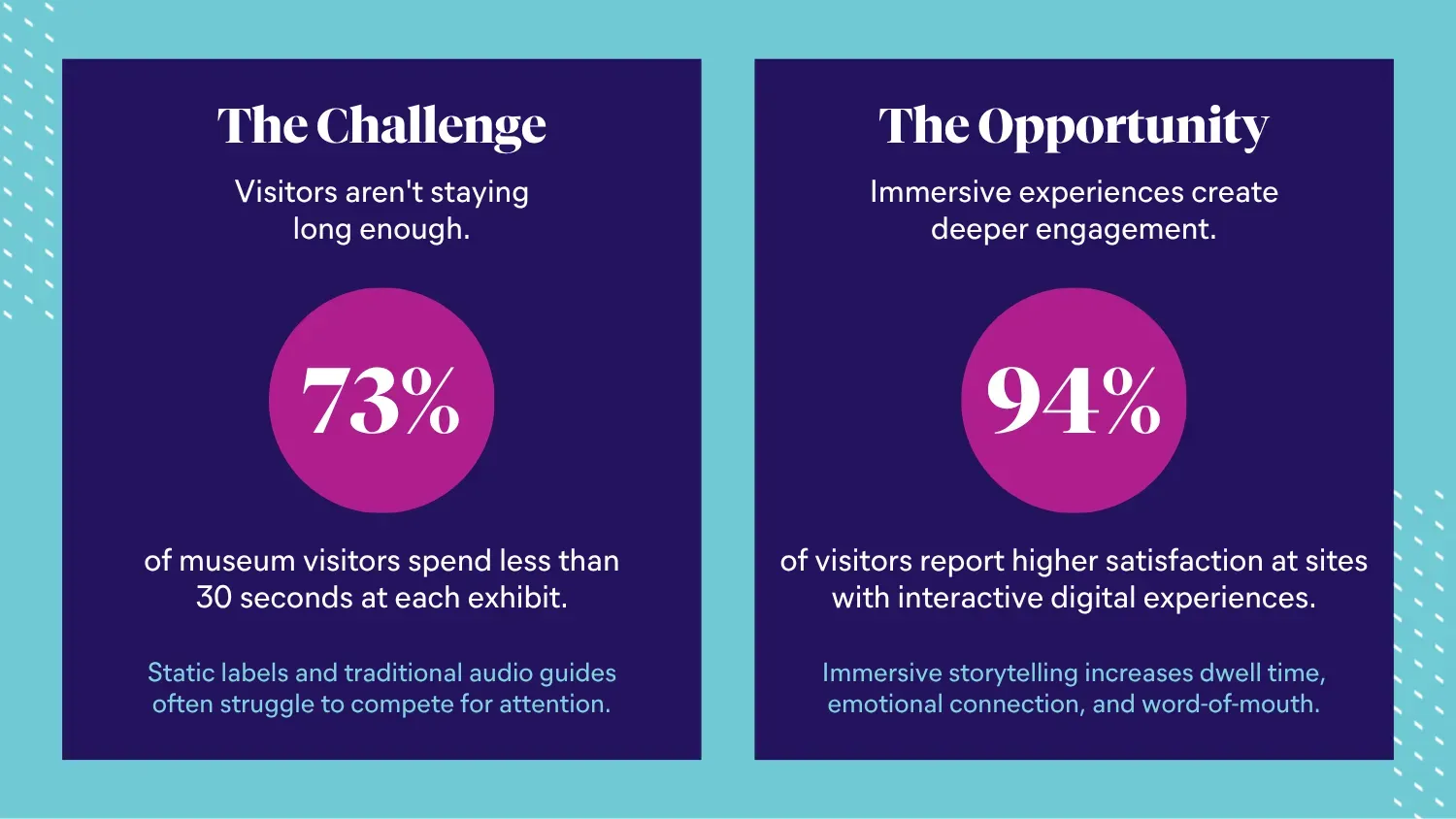
But simply presenting those stories does not guarantee visitors will connect with them.
A visitor can walk past an important landmark without understanding what happened there. They can move through a museum reading signs and viewing artifacts without ever feeling personally connected to the people behind them. Even the most historically significant places can struggle to bridge the distance between information and emotion.
Last Mile Media is working to close that gap.
Based in Montgomery, Alabama, Last Mile Media creates custom cinematic and audio experiences designed to help audiences move beyond learning the facts of a story to feeling its significance.
Justin Hampton, Creative Director at Last Mile Media, believes immersive storytelling can change the way visitors experience a place by giving them a reason to slow down, pay attention, and connect more deeply with the stories around them.
“One of the most impactful things we’ve seen is that people slow down on the Civil Rights Trail,” Justin said. “Static exhibits, even beautifully designed ones, move visitors through a space on autopilot. When you introduce an audio or cinematic experience tied to a specific place, something shifts.”
Visitors begin paying closer attention.
They linger.
“A story grants them permission to spend more of their most valuable asset…time.”
Through its partnership with STQRY, Last Mile Media pairs cinematic storytelling, immersive audio, and AI-powered experiences with STQRY's no-code platform.
For museums, historic sites, destinations, and cultural organizations, that means combining compelling narrative production with a powerful platform for delivering, managing, and scaling immersive visitor experiences.
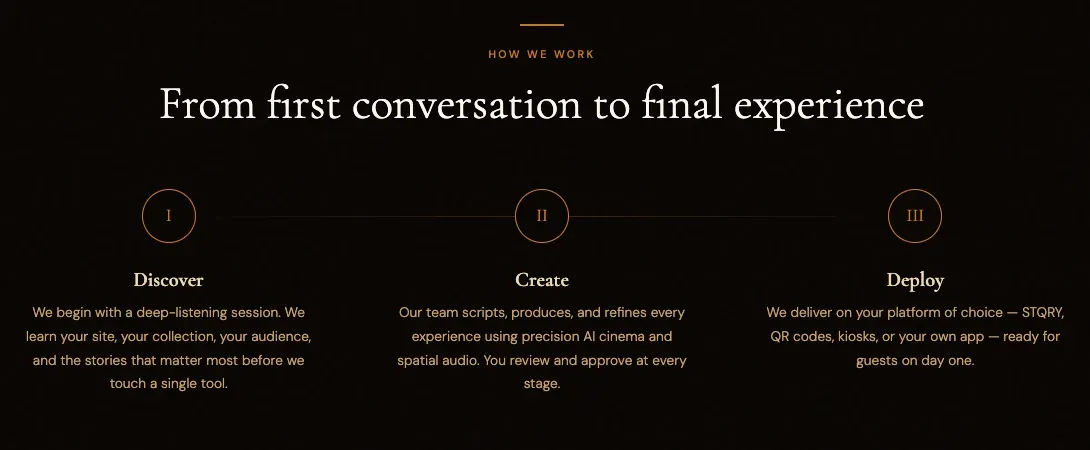
Closing the Gap Between Facts and Feeling
Last Mile Media is drawn to places that Justin says “carry weight”: historic sites, memorials, museums, and cultural heritage spaces with important stories and audiences who deserve immersive ways to experience them.
“We are a strong fit for institutions that realize there is a gap between their current content and their deserving audience,” Justin said. “That could be a museum that needs to appeal to a younger audience or an established cultural site with a narrative that’s longing for visual storytelling and language translation.”
Often, organizations assume that modernizing the visitor experience requires a major physical investment. Justin sees another possibility.
“There are also organizations who realize that their most impactful ROI might not be a new wing or a multimillion dollar renovation,” he said. “What could actually be missing is the narrative infrastructure that lets a visitor feel the story that the cultural space has been holding all along.”
That infrastructure can take many forms.
Audio that reaches visitors in the exact place where something happened. A voice that speaks a visitor’s first language. A cinematic experience that helps someone see a familiar place from an entirely different perspective.
“The applications are nearly endless,” Justin said.
But the purpose remains constant – helping visitors form a deeper connection with the stories a place has been holding all along.
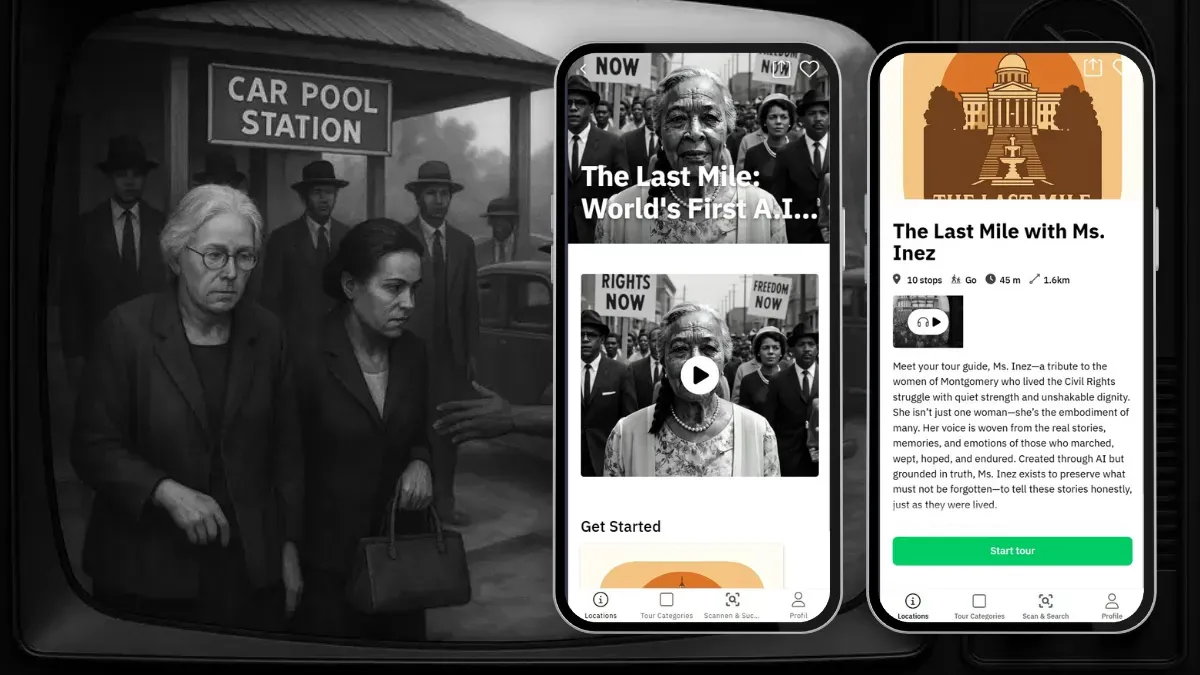
When Visitors Slow Down, Something Changes
Last Mile Media has seen that transformation firsthand.
“We’ve seen this in our ‘Ms. Inez’ Civil Rights Trail tour,” Justin said. “Visitors would normally stroll past significant sites along the Trail because they didn’t seem as interesting or prominent. But, their stories became the most engaging because people could now see parts of themselves in the personalized AI storyteller.”
The experience demonstrates an important principle behind Last Mile Media’s work.
A site does not become memorable or meaningful simply because visitors are told that it matters.
Visitors need an opportunity to understand the people, experiences, and emotions connected to that place.
When storytelling provides that context, overlooked locations can become some of the most significant parts of the visitor journey.
Bringing Stories to Visitors at the Moment of Encounter
Creating powerful content is one part of the visitor experience.
Delivering it at the right place and the right moment is another.
That is where Last Mile Media’s partnership with STQRY comes in.
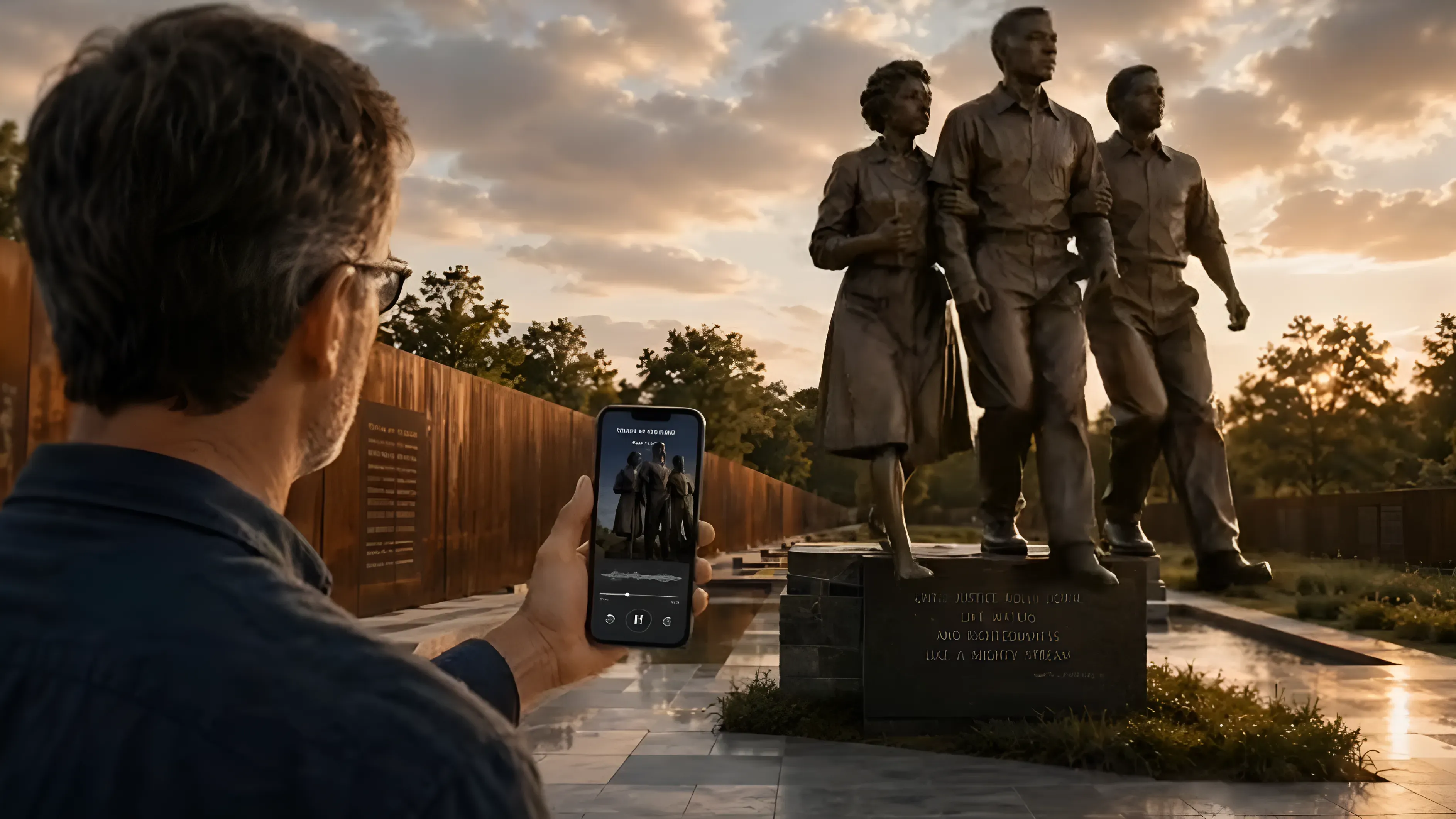
“The STQRY platform ties the content we create directly to the physical space, so the experience triggers at the exact moment of encounter, not a second before or after,” Justin said.
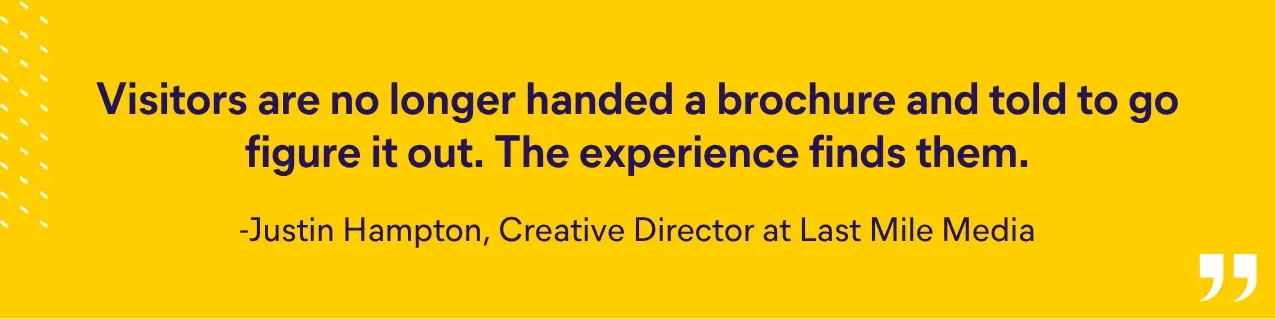
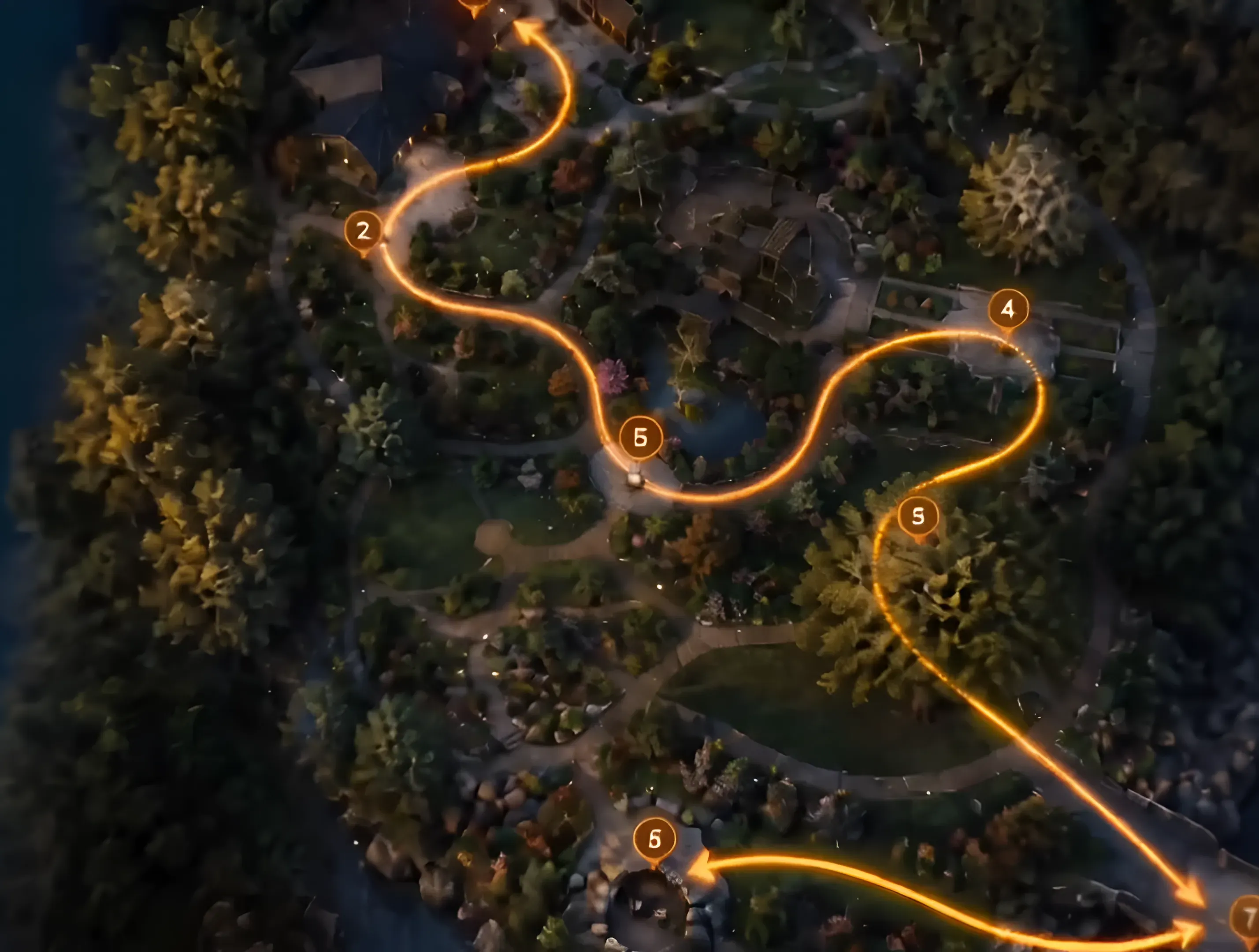
Together, Last Mile Media and STQRY can create fully produced audiovisual tours and custom storytelling personas that guide visitors through a space, delivering narratives at specific stops along the journey.
For museums, historic sites, memorials, and cultural destinations, this creates an opportunity to connect the physical environment with digital storytelling in a way that feels natural to the visitor.
Expanding Who Gets to Experience the Story
The partnership also helps cultural organizations address another challenge: reaching audiences across languages.
“For visitors whose first language isn't English, that same experience is available in over 50 languages; which fundamentally changes who the site is actually for,” Justin said.
For Last Mile Media, accessibility is part of a larger question about who gets to see themselves in the stories cultural organizations tell.
“That last point matters more than it might seem,” Justin said. “Most institutions aren't struggling because their story isn't worth telling. They're struggling because they haven't yet been able to tell it to everyone it could belong to, in a way that is lasting.”
By combining Last Mile Media’s narrative expertise with STQRY’s technology infrastructure, organizations can create stories that reach visitors in the places they are exploring and in languages they understand.
“STQRY gives us the infrastructure to close that gap, and we surface the narrative that makes closing it worth doing,” Justin said.
“That’s How It Was.”
For Justin, the most important measure of a storytelling experience cannot always be found in analytics.
“‘Cherish’ is a word we used deliberately, because what often gets measured in this industry is incomplete,” he said. “Dwell time, downloads, completion rates; those matter, but they don't tell you whether someone left changed.”
Instead, Last Mile Media looks for moments of genuine human response.
“That stat is found in moments of clarity, sometimes uncomfortable body language, or simply an unexpected laugh,” Justin said. “That's what we are after because that’s what people cherish.”
Sometimes, an experience leads visitors to ask questions and continue exploring a story after the tour has ended.
“The most satisfying moments as creators come when the experience sparks further curiosity and conversation,” Justin said. “Users now have questions that they just have to get answers to. Questions not necessarily for clarification but for furthering their knowledge of the narrative, because they now feel connected.”
But one of Justin’s most meaningful experiences came much closer to home.
His aunt had driven for a community-created taxi service as a teenager during the Montgomery Bus Boycott.
When she experienced the tour Last Mile Media created, she shared:
“That’s how it was.”
The tour sparked memories and led to an emotional conversation between Justin’s aunt and his mother about their personal experiences related to the boycott and what they had seen depicted in the app.
“At that moment it was about more than technology,” Justin said. “It was the fact that she’d accepted our humble offering. We’d successfully paid homage.”
The experience changed the way Last Mile Media approached its work.
“From that moment we’ve approached every narrative the same way,” Justin said. “Pay homage and visitors will pay attention.”
The Technology Is Not the Story
As artificial intelligence, augmented reality, and other immersive technologies become more accessible, cultural organizations have more opportunities than ever to rethink their visitor experiences.
But Justin cautions against starting with the technology.
“The biggest misconception is that technology alone is the full solution,” he said. “Often institutions have budgeted for an app or an AR experience before they've solved their own narrative problem.”
Technology can expand the reach and impact of a story.
But it cannot replace the story itself.
“The technology amplifies the narrative,” Justin said. “If the story they’ve been telling or want to tell is incomplete or not true to heart, the app will just make that more visible at higher volume.”
That is why Last Mile Media begins by helping organizations uncover what Justin describes as the “soul of a site.”
“This is why we treasure helping to surface the soul of a site, and share that soul with every visitor,” he said.
The same principle applies to artificial intelligence.
“Another misconception is that AI equals cheap and easy,” Justin said.
AI tools have genuinely lowered certain production costs like voice synthesis, translation, and content drafting, but the judgment layer is still entirely human and where most of the value lives.
Deciding which stories deserve to be told, whose voice should carry them, what should be left out, and how painful or contested histories should be approached requires human judgment.
“None of that is automated,” Justin said.
And sometimes, the most responsible decision is not to add more technology at all.
“It’s really about wisdom and being selective in where the technology is appropriate,” Justin said. “Some stories need space and silence more than they need surround sound.”
Start With One Story
For museums and destinations considering how to modernize their visitor experience, Justin’s advice is to resist beginning with a list of technologies.
Instead, begin with an honest conversation about the stories the organization already holds.
“That conversation should focus on the stories your site already contains,” Justin said. “It should unveil the reasons why your space exists, the purpose behind highlighting the things it does.”
The subject does not necessarily have to be dramatic or monumental.
“If that’s artwork, why is this art important? If it’s a cultural site, what historical contribution makes it necessary?” Justin said. “It doesn’t have to be visceral either, just real. An AI civil rights recreation can be just as engrossing as showing an artist’s journey to making an abstract sculpture.”
Once an organization understands the story it wants to tell, Justin recommends starting with depth rather than scale.
“Resist the impulse to solve everything at once,” he said. “Pick one space, one story, one audience segment, and do it with depth.”
A focused experience can provide more value than a large collection of digital content visitors never truly engage with.
“A few well-crafted stops that makes someone feel something is worth more than twenty screens of digital content that no one engages with,” Justin said.
Some institutions may be ready for a complete immersive experience.
Others can start smaller.
“Build the proof of concept, learn from it, then scale,” Justin said.
Measuring What Matters
After an experience launches, Last Mile Media begins by looking inward.
“Honestly, the first thing I look for is whether the institution's own staff feel proud of it,” Justin said. “Whether the curator, the guide, and in some cases the community surrounding the site actually believe it represents the narrative and the space well.”
For Justin, those audiences are often the most important critics.
“They're the toughest critics and they're usually right.”
From there, success means reaching people in new ways.
“If someone who didn't expect to be moved ends up reflecting for several minutes during the experience, that's success too,” Justin said. “Elders who pause silently, children now curious about a static exhibit, and in some cases people that ask how they can learn more (or donate). That sort of success is one of our main motivators.”
Traditional measurements still matter.
Downloads and visitor numbers provide important information.
But Last Mile Media also looks at return visits, word-of-mouth referrals, and qualitative feedback from both new and existing audiences.
“When a return visitor is moved, we did justice to something they held dear,” Justin said. “When a new visitor is moved, the community connected to this story, its tribe, has grown by at least one.”
The Future of Immersive Storytelling
Justin believes museums and cultural organizations are moving toward a future in which deeply connected visitor experiences become the expectation rather than the exception.
“Museums and cultural sites are supposed to convey an appreciation of the human experience,” he said. “They should bring a visitor proximate to things that are not a part of their everyday lives.”
The most successful immersive experiences already demonstrate what happens when audiences are given an opportunity to feel transported into another place or perspective.
New technologies are making those possibilities increasingly accessible.
“The exciting new reality is that cinematic AI, augmented reality, and things like geolocation or motion sensing have made deeply immersive experiences more accessible than ever before,” Justin said.
For cultural organizations, that accessibility creates an opportunity to think more ambitiously about what visitors should experience and remember.
“This now allows every site to realistically dream about what they want their visitors to walk away with,” Justin said.
And he believes visitor expectations will continue evolving quickly.
“Our prediction is that in just a few years, this kind of storytelling will become a standard expectation of every visitor.”
For Last Mile Media and STQRY, the future of immersive storytelling is about helping organizations uncover the stories that matter, tell them with care, and deliver them in ways that invite visitors to stop, listen, feel, and remember.
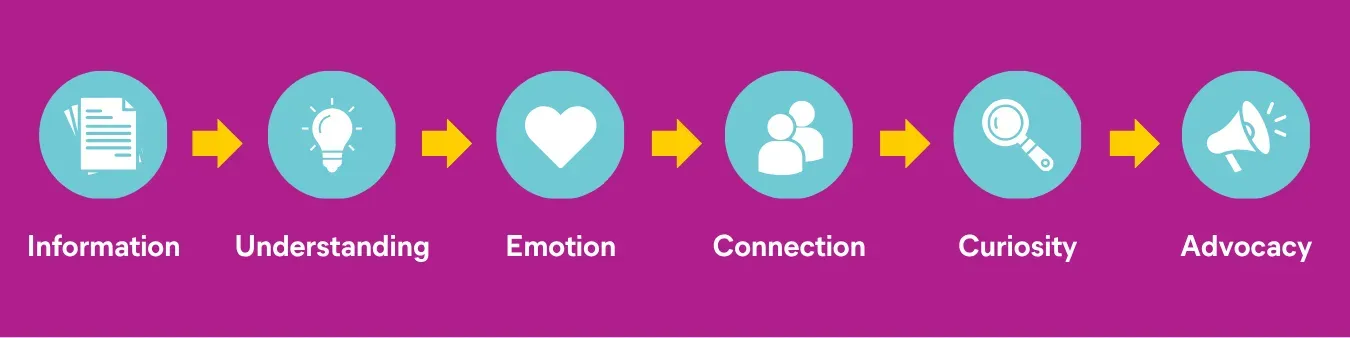
When technology serves the story, visitors move from information to emotion.
They don't just learn what happened—they understand why it mattered, why it still matters, and why it's worth preserving.
That's the kind of experience that sparks curiosity, inspires conversation, encourages return visits, generates word-of-mouth, and turns visitors into advocates for the stories, places, and communities behind them.
About Last Mile Media
Based in Montgomery, Alabama, Last Mile Media creates audio and cinematic experiences for the world’s most important stories. Built on cutting-edge AI, they help close the gap between facts and being moved by the story that made them.
Learn more about Last Mile Media →
Bring Your Story to Life with STQRY
Whether you're building a self-guided tour, scavenger hunt, kiosk, or multimedia app, STQRY gives you everything you need to create, manage, and grow engaging visitor experiences—all without writing code.
From multilingual support and GPS-triggered audio to interactive maps, ticketing, and monetization, STQRY's flexible platform is designed to meet organizations wherever they are in their digital storytelling journey.
Looking for the Right Creative Partner?
Every great visitor experience starts with a story. Whether you're looking for cinematic production, design, strategy, or implementation support, our network of trusted partners can help bring your vision to life.
Connect with our team to learn more about our partners & affiliates and discover how, together, we can help you launch and market your next visitor experience with speed, confidence, and the right expertise—starting with nothing more than an idea.